


Reducing Stick-Slip: The Role of Hydraulic Oscillators in Drilling Efficiency
In the era of Extended Reach Drilling (ERD) and complex horizontal trajectories, friction is the primary enemy of performance. As the drill string grows longer and the wellbore more horizontal, the contact between the pipe and the formation creates significant drag. This leads to the phenomenon known as Stick-Slip—where the drill string momentarily stops (sticks) and then suddenly releases (slips). To combat this, the Hydraulic Oscillator has become an essential component in the Bottom Hole Assembly (BHA), transforming hydraulic energy into mechanical movement to keep the string in motion.
1. The Mechanics of Axial Oscillation
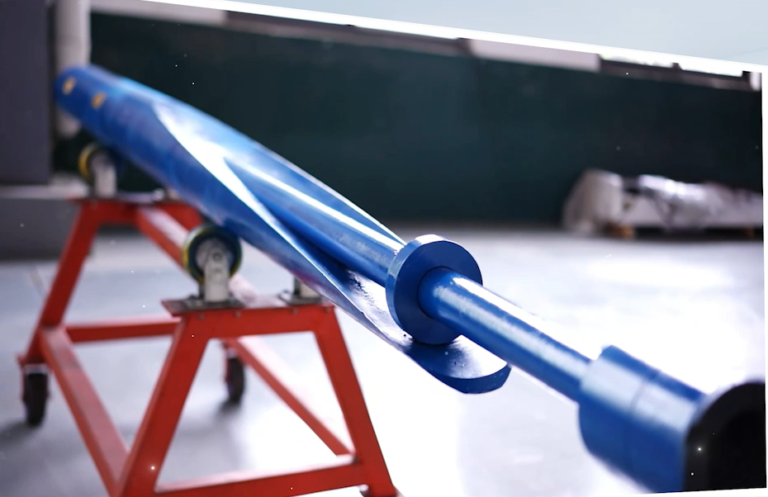
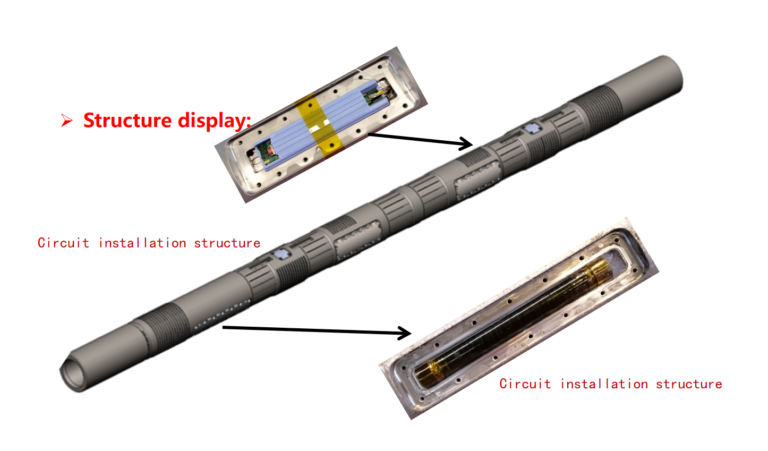
A Hydraulic Oscillator is a downhole tool designed to generate consistent axial vibrations. It typically consists of two main sections:
- The Power Section: Utilizing the Moineau principle (similar to a mud motor), the flow of drilling fluid rotates a rotor within a stator.
- The Valve Assembly: This rotation opens and closes a valve at high frequencies, creating pressure pulses in the fluid column. These pulses act on a telescopic mandrel, causing the tool to oscillate axially. Unlike lateral vibrations which are destructive, these controlled axial oscillations are designed to break the frictional bond between the drill string and the wellbore wall.
2. Breaking Static Friction during Slide Drilling
In directional drilling, “sliding” (drilling without rotating the entire drill string) is necessary to steer the well. However, when the string is not rotating, static friction increases dramatically. This often prevents the “Weight on Bit” (WOB) from reaching the bit, leading to stalled ROP and poor steering control. The Hydraulic Oscillator converts static friction into dynamic friction. By keeping the drill string in a constant state of axial micro-movement, it prevents the pipe from “setting” against the formation. This allows the driller to maintain a smooth, consistent slide, resulting in a more accurate wellbore trajectory and significantly higher ROP.
3. Improved Weight Transfer and Bit Performance
One of the most significant advantages of reducing stick-slip is the stabilization of Weight on Bit. In high-friction wells, the WOB applied at the surface often reaches the bit in “surges.” These surges can damage PDC cutters and cause erratic torque. By reducing the axial drag, the Hydraulic Oscillator ensures that the force applied at the surface is transmitted linearly and steadily to the cutting face. This leads to:
- Steady Torque: Reducing the risk of catastrophic “twist-offs.”
- Even Bit Wear: Extending the life of expensive PDC bits by preventing impact loading.
- Better Data Quality: Smoother drilling environments result in less “noise” for MWD/LWD sensors, leading to higher-quality downhole data.
4. Operational Savings and NPT Reduction
The economic impact of stick-slip is measured in Non-Productive Time (NPT). Frequent stalls, bit damage, and the inability to reach the target depth (TD) due to friction can add millions to a drilling budget. Hydraulic Oscillators allow operators to drill longer horizontal sections in a single run. By maintaining ROP in the “lateral,” they reduce the number of trips required to change bits or BHAs. In 2026, where efficiency is the mandate, the oscillator is no longer an optional luxury—it is a mechanical necessity for any high-angle well.
5. Engineering Standards and Fluid Compatibility
Modern Hydraulic Oscillators are designed to be “transparent” to the rest of the operation. They are engineered to operate with a wide range of mud weights and types (OBM, WBM, and SBM) and are compatible with MWD signal transmission. The pressure drop across the tool is optimized to ensure that sufficient hydraulic power remains available for the bit nozzles and other BHA components.
6. Conclusion
The Hydraulic Oscillator represents a fundamental shift in how we manage downhole friction. By proactively breaking static friction through axial oscillation, it solves the age-old problem of stick-slip and poor weight transfer. For operators targeting unconventional reservoirs or ERD projects, integrating a high-performance oscillator is the most effective way to ensure the drill string keeps moving forward, no matter how high the friction.