


Why Rubber Friction Reduction Subs Protect Your Casing: The Essential Shield for Long-Reach Wells
In the high-stakes world of Extended Reach Drilling (ERD) and horizontal well construction, the interface between the drill pipe and the casing is a constant source of mechanical stress. As the drill string rotates at high speeds, the “metal-to-metal” contact between the pipe and the casing can lead to catastrophic wear. Rubber Friction Reduction Subs (also known as Non-Rotating Protectors) are the primary defense mechanism against this damage, ensuring the structural integrity of the wellbore’s permanent steel barrier.
1. Eliminating Metal-to-Metal Friction
The fundamental role of a Rubber Friction Reduction Sub is to act as a sacrificial buffer. In high-angle or horizontal sections, gravity causes the drill string to lie against the low side of the casing.
- The Hazard: Rotating steel drill pipe against steel casing creates a “grinding” effect that can thin the casing wall, leading to bursts, collapses, or leaks.
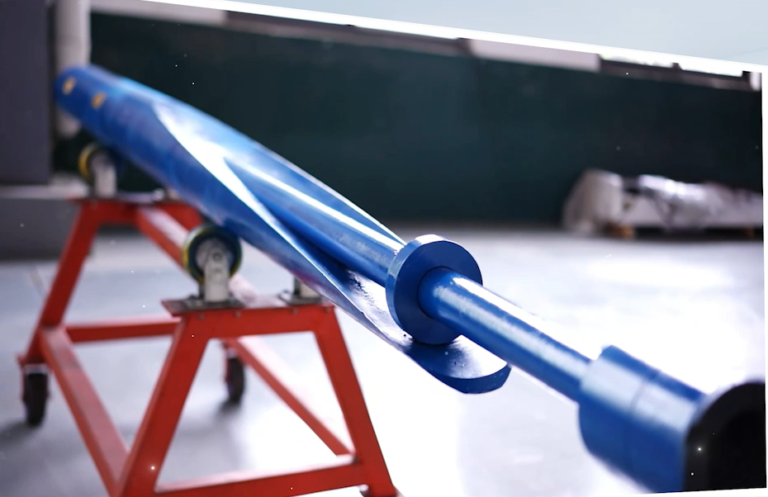
- The Solution: The sub features a high-grade rubber sleeve that remains stationary against the casing wall while the drill pipe rotates freely inside it. This replaces destructive metal-to-metal friction with a low-friction interface, effectively “insulating” the casing from the rotation of the string.
2. Drastic Torque Reduction in Complex Trajectories
As wells become longer and more complex, torque management becomes the limiting factor for reaching Total Depth (TD). Friction between the string and the casing accounts for a significant portion of the total torque load.
- Rolling Efficiency: By utilizing a rubber sleeve that does not rotate with the string, the coefficient of friction is reduced by as much as 50% to 70%.
- Operational Gains: This reduction in torque allows for higher RPM at the bit and more consistent Weight-on-Bit (WOB), which directly translates into a faster Rate of Penetration (ROP).
3. Preventing Heat Generation and Casing Fatigue
Friction creates heat. In deep, high-temperature wells, the localized heat generated by a rotating drill pipe can weaken the casing’s metallurgical properties.
- Thermal Protection: The specialized rubber compounds used in these subs are designed to dissipate heat and withstand high downhole temperatures. By preventing localized “hot spots,” the subs preserve the tensile strength and burst rating of the casing string.
4. Economic Value: Protecting a Permanent Asset
The casing is a permanent part of the well’s infrastructure, while the drill pipe is a temporary tool. A single casing failure due to wear can result in a multi-million dollar “workover” or even the total loss of the well.
- Cost-Effective Insurance: The cost of running Rubber Friction Reduction Subs is negligible compared to the cost of a casing patch or a side-track necessitated by casing wear.
- Extended Well Life: By maintaining the original wall thickness of the casing, these subs ensure the well remains safe for production and future stimulation (like high-pressure hydraulic fracturing) for decades.
5. Engineering for 2026: Material Science
Modern Rubber Friction Reduction Subs are no longer “just rubber.” They are sophisticated engineering components:
- Advanced Elastomers: Formulated to resist Oil-Based Mud (OBM) and synthetic fluids that would degrade standard rubber.
- Hydrodynamic Design: The sleeves often feature fluted profiles to allow for maximum fluid bypass (TFA), ensuring that the tool does not impede hole cleaning or cuttings transport.
6. Conclusion
In the drilling landscape of 2026, where horizontal laterals are pushing the boundaries of physics, protecting the casing is not just a safety requirement—it is an economic mandate. Rubber Friction Reduction Subs provide a simple, reliable, and highly effective way to manage torque and eliminate casing wear. For any project involving high-angle trajectories, these tools are the essential shield that ensures the well’s long-term viability.