
Protecting Drill Strings: The Role of Double-Step Drill Pipe Protective Subs
In the aggressive environment of modern drilling, the drill string is constantly battling two physical forces: rotational torque and lateral abrasion. While many tools focus on protecting the casing, the Double-Step Drill Pipe Protective Sub is specifically designed to protect the “spine” of the operation—the drill string itself. By incorporating a specialized dual-diameter geometry, these subs provide a critical layer of defense that ensures tool joints and pipe bodies remain in premium condition, even after thousands of hours of rotation in abrasive formations.
1. The Geometry of Protection: What is a “Double-Step”?
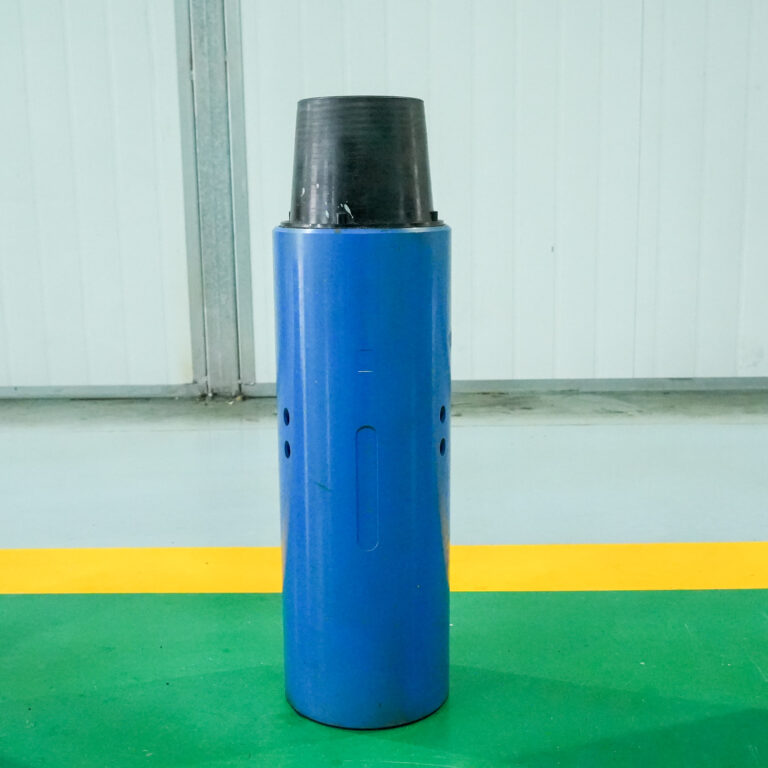
The distinguishing feature of this sub is its stepped profile. Unlike a standard cylindrical sub, the double-step design features two distinct diameters.
- The Primary Step: Acts as the main contact point with the wellbore wall. It is typically reinforced with high-density hardfacing.
- The Secondary Step: Provides a transition zone that increases the “stand-off” distance between the drill pipe body and the formation. This design ensures that when the string flexes or leans against the wellbore, the contact occurs on the sacrificial, reinforced surface of the sub rather than the critical, thinner walls of the drill pipe or the precision-machined tool joints.
2. Preventing “Under-Gauge” Tool Joints
One of the most expensive failures in a drill string is the “down-grading” of tool joints. As tool joints rotate against the formation, they lose diameter. Once a joint falls below a certain measurement (under-gauge), it no longer has the structural integrity to support the required torque or tensile loads. Double-Step Protective Subs act as “bumpers.” By being slightly larger in diameter than the tool joints they protect, they take the brunt of the abrasive wear. It is significantly more cost-effective to replace or refurbish a protective sub than to recut or retire hundreds of feet of drill pipe due to worn connections.
3. Optimizing Torque and Drag Management
In 2026, reaching Total Depth (TD) in ultra-long laterals is often a fight against torque. Every square inch of the drill string that touches the wellbore adds to the cumulative drag.
- Point Contact vs. Line Contact: The double-step design creates a “point contact” scenario. Instead of the whole pipe body dragging along the formation (line contact), only the reinforced steps of the sub make contact.
- Lower Coefficient of Friction: When these steps are treated with modern, low-friction hardfacing, the overall rotational torque of the string is reduced, allowing for better weight transfer to the bit and higher ROP.
4. Enhanced Wellbore Conditioning
Beyond protection, the double-step profile provides a secondary benefit: borehole smoothing. As the sub rotates, the stepped edges act as mild “reamers,” knocking down micro-ledges and smoothing out the filter cake. This creates a more uniform wellbore diameter, which is essential for reducing “surge and swab” pressures during tripping and ensuring that the BHA doesn’t get hung up on local irregularities.
5. Material Integrity and Hardfacing Standards
To survive the high-torque, high-vibration environment of the BHA, our Double-Step Protective Subs are manufactured to the highest standards:
- AISI 4145H Mod Steel: Fully heat-treated to ensure maximum tensile and torsional strength.
- Advanced Hardfacing: Available in various grades, including Tungsten Carbide Inserts (TCI) for maximum abrasion resistance or “Casing Friendly” alloys for applications where the sub must pass through existing casing strings.
6. Conclusion: A Strategic Investment in BHA Longevity
The Double-Step Drill Pipe Protective Sub is not just a piece of steel; it is a strategic insurance policy for your most valuable drilling assets. By providing superior stand-off, protecting tool joints from abrasive wear, and assisting in torque reduction, these subs extend the lifecycle of the drill string and reduce the frequency of expensive inspections and repairs. For any high-spec drilling project in 2026, double-step protection is a fundamental requirement for operational success.