


Azimuthal Gamma Measurement Sub: Wall-mounted high-sensitivity sector formation lithology mapping for boreholes >8 inches vs. low-resolution probe tools
Maintaining optimal wellbore placement within narrow, thin-bed reservoirs requires precise real-time geosteering and high-resolution formation boundary detection. Traditional probe-mounted natural gamma ray tools sit centered inside the drill collar, suffering from severe mud attenuation and providing only omnidirectional average readings that fail to distinguish whether a bed boundary is approaching from the roof or floor of the borehole—especially in larger hole diameters exceeding 8 inches. When evaluating Azimuthal Gamma Measurement Sub: Wall-mounted high-sensitivity sector formation lithology mapping for boreholes >8 inches vs. low-resolution probe tools, the geosteering advantage of direct borehole-wall proximity and directional sectoring becomes absolute. The advanced 方位角伽马测量子系统 integrates high-sensitivity scintillation detectors directly into the outer collar wall, delivering crisp 360-degree multi-sector lithology imaging and instantaneous bed-boundary identification in large-bore horizontal intervals.
1. Engineering Architecture of Wall-Mounted Azimuthal Imaging
Unlike centered internal probes that suffer from heavy drilling fluid absorption, the azimuthal gamma sub places the sensor package as close to the formation face as mechanically possible.
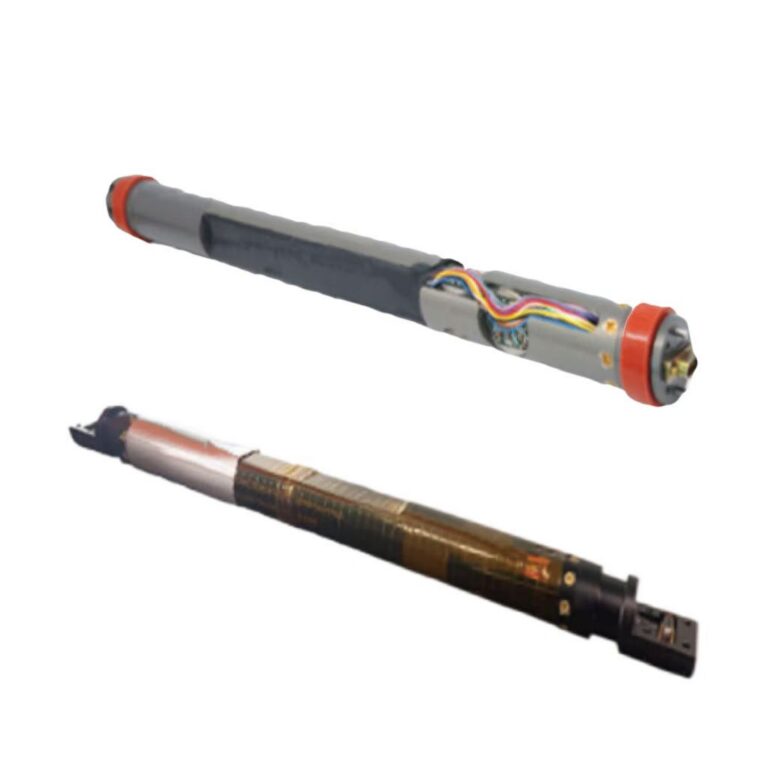
- Wall-Mounted High-Sensitivity Scintillation Detectors: Positioned eccentrically within a specialized collar pocket near the outer tool surface, minimizing mud-column attenuation and maximizing gamma count rates in boreholes >8 inches.
- Multi-Sector Azimuthal Binning: Divides the 360-degree wellbore circumference into distinct directional sectors (up, down, left, right, or 8-sector/16-sector images) synchronized with real-time dynamic toolface orientation.
- Focused Shielding Geometry: Incorporates high-density tungsten shielding behind the detector window to block background radiation from the opposite side of the borehole, ensuring sharp directional contrast.
2. 主要运营优势
- Precision Geosteering in Thin Beds: Allows directional drillers and geologists to immediately identify whether the bit is exiting the reservoir through the top or bottom boundary, enabling rapid corrective steering adjustments.
- Superior Performance in Large Boreholes (>8 Inches): Overcomes the severe mud signal-loss issues that cripple standard probe tools in 8-1/2 inch, 12-1/4 inch, and larger horizontal sections.
- 最大化储层接触面积: Keeps the wellbore centered within the highest-quality pay zone, directly boosting well productivity and ultimate hydrocarbon recovery.
3. 井下耐久性与材料
Machined from high-strength non-magnetic alloy steel collars with ruggedized shock-mounted crystal detectors and high-pressure tungsten windows, the sub endures intense rotary vibration, heavy weight-on-bit, and high-temperature HPHT environments.
4. 结论
Precision reservoir navigation demands real-time directional vision rather than blind bulk averages. By replacing low-resolution probe tools with the wall-mounted Azimuthal Gamma Measurement Sub, operators gain high-sensitivity sector lithology mapping, accurate bed-boundary detection in boreholes >8 inches, and maximized reservoir contact.