


Navigating the Thermal Frontier: Engineering Reliable Survey Tools for HPHT Wells
As exploration targets push deeper into high-pressure, high-temperature (HPHT) frontiers, standard downhole tools face extreme thermal stress that can cause electronic failure, sensor drift, and battery degradation. In environments where temperatures regularly exceed 150°C (302°F) and approach 200°C (392°F) or higher, specialized High-Temperature Survey Tools are not just an upgrade—they are an absolute necessity for maintaining wellbore trajectory and operational safety.
1. The Engineering Challenges of Extreme Heat
Standard electronics and battery chemistries degrade rapidly under severe thermal loads.
- Semiconductor Breakdown: Standard silicon chips experience thermal runaway and leakage currents at elevated temperatures, leading to corrupted data or total system shutdown.
- Battery Chemistry Limits: Traditional lithium cells lose capacity or pose safety risks (such as venting or thermal runaway) when subjected to prolonged high-bottom-hole temperatures.
- Mechanical Expansion: Differential thermal expansion between dissimilar metals can stress internal sensor mounts, causing alignment shifts and compromised survey accuracy.
2. Key Technological Solutions in High-Temperature Design
To survive and thrive in HPHT wells, modern high-temperature survey tools incorporate advanced engineering materials and architectures:
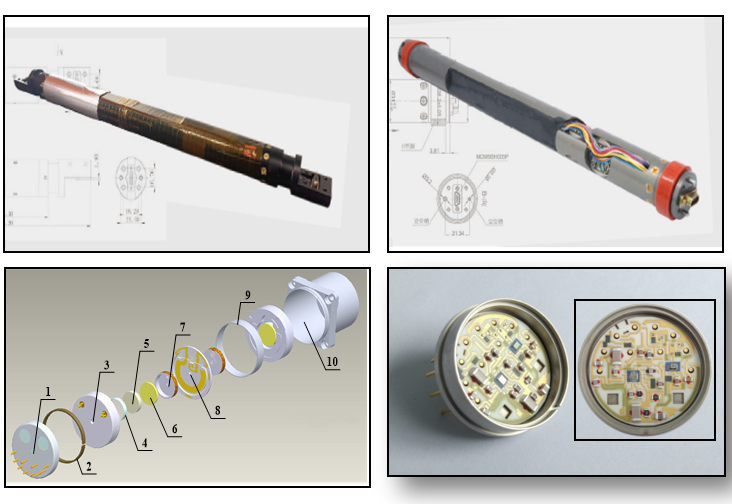
- Silicon-On-Insulator (SOI) Technology: Specialized microelectronics designed to operate reliably at extreme temperatures without the signal leakage seen in standard silicon.
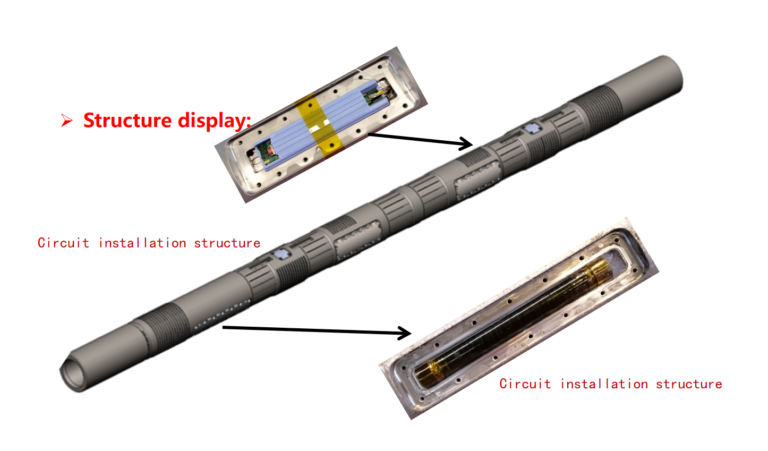
- Dewar Flask (Thermos) Protection: Encapsulating sensitive electronic and battery packages inside multi-layered, vacuum-insulated thermal flasks to extend downhole operational time.
- High-Temp Battery chemistries: Utilizing robust lithium-metal or specialized chemistry cells optimized for high-temperature stability and sustained power output.
3. Key Operational Advantages
- Uninterrupted Data Flow: Ensures continuous survey accuracy and telemetry reliability without requiring frequent, costly cooling trips out of the hole.
- Mitigated NPT (Non-Productive Time): Prevents premature tool failure, significantly reducing the risk of stuck pipe or lost-in-hole scenarios associated with thermal breakdowns.
- Regulatory Compliance: Delivers certified, high-accuracy directional surveys required for deep exploratory wells and complex multi-well pad developments.
4. Conclusion
High-Temperature Survey Tools represent the pinnacle of downhole reliability in extreme environments. By combining advanced materials science with ruggedized thermal protection, these tools ensure that even the deepest, hottest wells can be mapped and navigated with absolute precision.