


While-Drilling Safety Bypass Device: Dual-function while-drilling sealing and reverse-coupling vs. limited traditional PBL subs
Wellbore fluid loss and pipe sticking are among the most severe and costly challenges encountered during high-performance drilling. While traditional PBL (bypass) subs are frequently deployed to combat lost circulation, they suffer from a major structural limitation: insufficient waterway clearance that blocks fishing tools, prevents instrument wireline passage, and disallows tool retrieval following a failure. When evaluating While-Drilling Safety Bypass Device: Dual-function while-drilling sealing and reverse-coupling vs. limited traditional PBL subs, the engineering advantages become starkly evident. The advanced while-drilling safety bypass device integrates dual functionality into a single tool, combining unlimited while-drilling bypass sealing with a reliable reverse-coupling mechanism to handle severe downhole complexity.
1. Engineering Architecture of the Dual-Function Bypass System
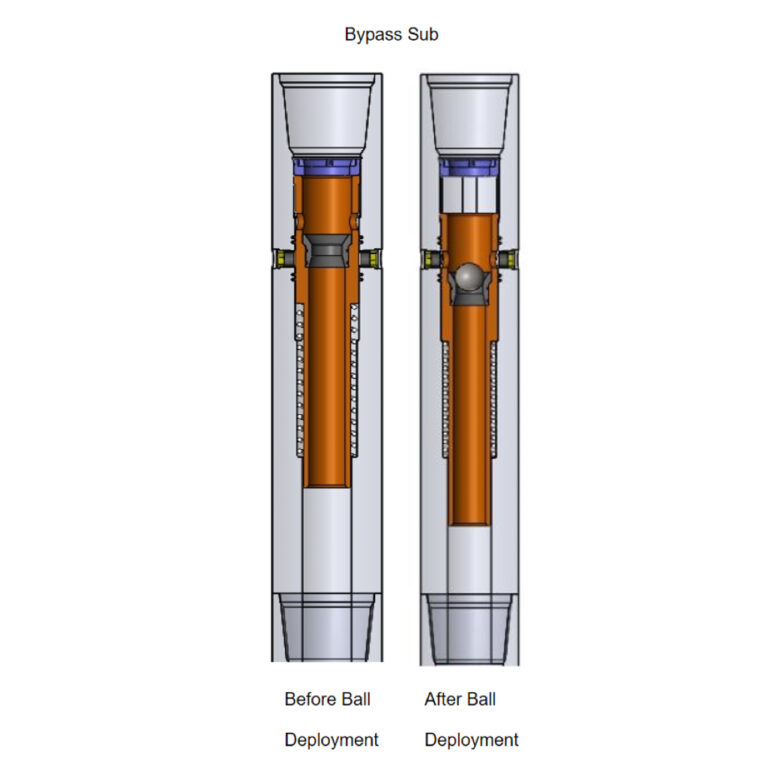
Unlike standard PBL subs that restrict inner bores and lack mechanical versatility, this system utilizes an innovative deployable self-floating carrier and a specialized sleeve architecture.
- Unobstructed Bore Design: Maintains a clear inner drill string diameter, ensuring that fishing tools and logging instruments can pass through freely without restriction.
- Self-Floating Retrieval System: Utilizes a buoyancy chamber and deployment tool to pump a carrier down to retrieve the sealing ball, enabling unlimited while-drilling sealing operations.
- Integrated Reverse-Coupling Mechanism: Employs a splined sleeve that separates from the internal keyway upon counterclockwise drill string rotation, allowing safe mechanical separation below a stuck point.
2. Key Operational Advantages
- Unlimited Sealing Operations: Reconstructs circulation paths using a time-separation method (deploying the ball first, then retrieving it via buoyancy) to manage losses repeatedly on a single trip.
- Dual-Action Risk Mitigation: Serves both as an efficient lost-circulation sealing sub and as a reverse-coupling tool to recover strings after stuck-pipe incidents.
- Preservation of Wireline Access: Eliminates the operational bottlenecks of traditional tools, allowing continuous logging and well-control interventions.
3. Downhole Durability and Materials
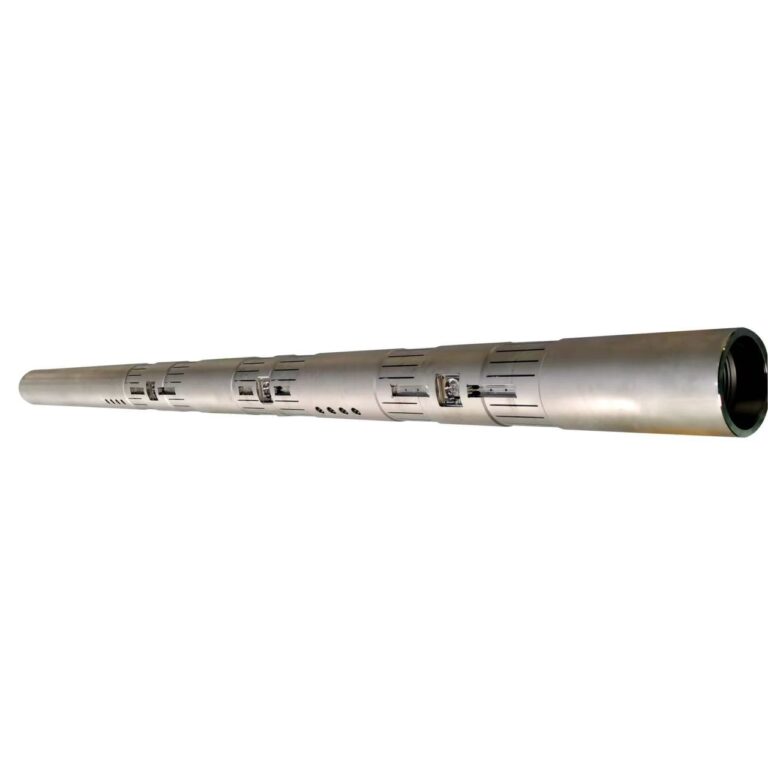
Machined from high-strength forged alloy steels with specialized oil-injection ports and heavy-duty internal pistons, the device endures severe axial loads, high pressures, and aggressive downhole mud environments.
4. Conclusion
Overcoming severe formation losses and pipe sticking requires advanced, multi-purpose downhole architecture. By replacing restricted traditional subs with the dual-function While-Drilling Safety Bypass Device, operators secure absolute control over complex wellbore conditions while keeping strings fully accessible.